Flip Jump Technique: How to Perfect Your Toe Pick and Takeoff
Clean flip jump technique comes down to three things: a secure back inside edge, a toe pick placed under your hip (not dragging far behind you), and a takeoff that’s already rising before the pick fully touches down. Fix the timing between edge, pick, and rise, and the rest of the jump falls into place.
I’ve watched hundreds of skaters wrestle with this exact jump. It’s one of the most common technique puzzles I work through with skaters at every level, from kids just off toe loops to competitive skaters chasing consistency for combinations. A flip jump is a toe-assisted jump: you take off from a back inside edge, plant the toe pick of your free foot, and land on the back outside edge of that same foot.
This post is about the part that trips people up the most — toe pick timing and takeoff mechanics. Almost every inconsistent flip I see traces back to one of those two things, not to rotation speed or air position. Get the entry and the pick right, and the rotation tends to take care of itself.
What Is a Flip Jump in Figure Skating?
A flip jump is a toe-assisted jump that takes off from a back inside edge, uses the toe pick of the free foot to vault off the ice, and lands on a back outside edge of that same free foot. It’s one of the six jumps every figure skater eventually needs, and it usually shows up right after skaters get comfortable with toe loop.
There are two common ways skaters enter a flip:
- Three-turn entry: forward glide on the skating foot, into a forward outside three-turn, which puts you onto the back inside edge, followed by the reach and pick.
- Mohawk entry: a direct step from forward to backward, landing right onto the back inside edge without a turn.
For consistency through this whole article, I’ll describe a counterclockwise-rotating skater: left back inside edge, right toe pick, landing on the right back outside edge. If you rotate clockwise, just mirror everything — same principles, opposite side.
Here’s why getting this jump clean matters beyond just ‘landing it once.’ The flip is the bridge jump — it sets you up for harder toe jumps and toe-jump combinations down the road. Precise edge and pick timing removes that frustrating ‘why did that one feel completely different from the last one’ problem that shows up when technique is inconsistent. And from a pure training standpoint, stable edges and controlled timing mean fewer wild, scraping entries eating up your practice time and ice.
The Flip Jump Setup — Entry, Edge, and Position
Getting the Back Inside Edge Right
Before you even think about the pick, your back inside edge needs to be secure. This is where most flip problems actually start, even though skaters usually blame the jump itself.
Look for these position cues:
- Deep knee bend on the skating leg — not a slight bend, a real bend you can feel in your thigh.
- Body inclined slightly forward, weight centered over the middle-to-front of the skating foot. If you’re sitting back on your heel, the edge won’t hold.
- Free leg extended behind you, toe pointed down, starting to prepare the reach.
Common mistake: letting the edge get shallow or drift toward flat. A weak edge sets up bad pick placement no matter how good your reach looks. Fix it: hold the curve of that back inside edge a beat longer, and check that your skating knee stays bent through the whole glide — not just bent for a second right before the pick.
Why the Backswing Matters
The free-leg backswing and the pick timing are directly connected, and this is where I see the biggest technical gap in developing skaters.
Here’s the correct sequence: the free leg reaches back, and then the feet start drawing together before the toe actually touches down. Done right, this puts the pick under your picking-side hip — not way out behind your body.
My cue for this: ‘reach, then gather’ — not ‘reach and stab.’ Skaters who stab tend to leave the foot out there too long, which creates a long, dragging pick that kills any vertical lift. Fix it: shorten the front-to-back distance between your feet at the exact moment of the pick. The gather has to happen before the pick, not after.
Free Leg and Upper Body Positioning
Keep the free leg’s toe pointed down, and keep your weight on the skating foot right up until the pick happens — don’t transfer early. Your shoulders and arms should stay aligned over the skating edge, not twisting ahead of the jump.
One tool I use constantly with students: have them hold their arms in a controlled, slightly-open shape through the entry — like holding a small ball between the hands. It sounds simple, but it stops the flailing that throws off timing more than almost anything else.
Flip vs. Lutz — Clearing Up the Confusion
This mix-up comes up in almost every lesson I teach, so let’s settle it clearly:
| Flip | Lutz | |
|---|---|---|
| Edge | Back inside edge | Back outside edge |
| Typical entry | Three-turn or mohawk | Long backward glide, no turn right before takeoff |
| Toe pick and takeoff leg | Look similar | Look similar |
To an untrained eye, the pick and the takeoff leg look almost identical between the two jumps. The edge direction is what actually separates them — everything else about the setup can look deceptively alike.
The Toe Pick — Where Every Flip Jump Begins
What ‘Toe Pick’ Means in a Flip
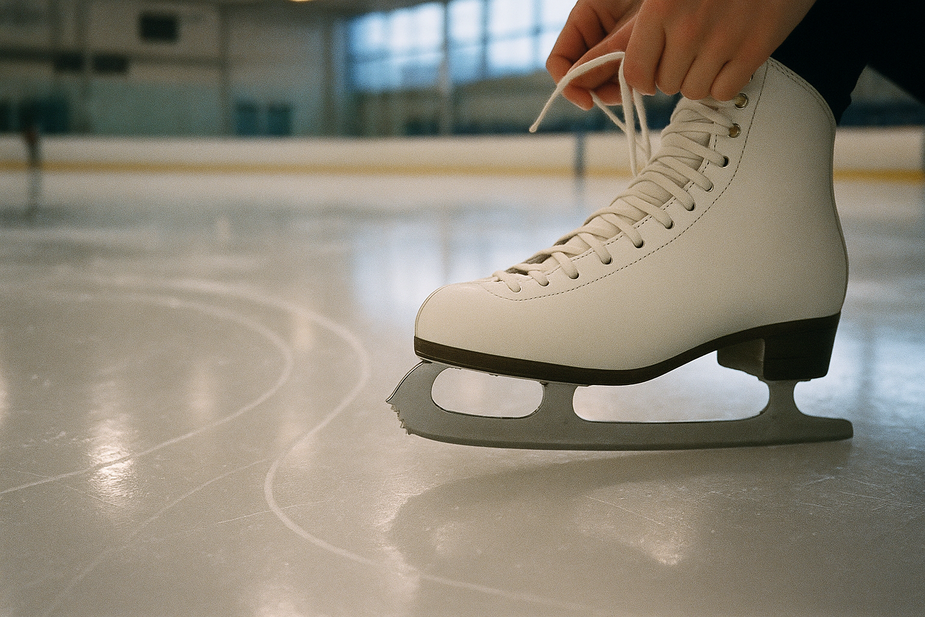
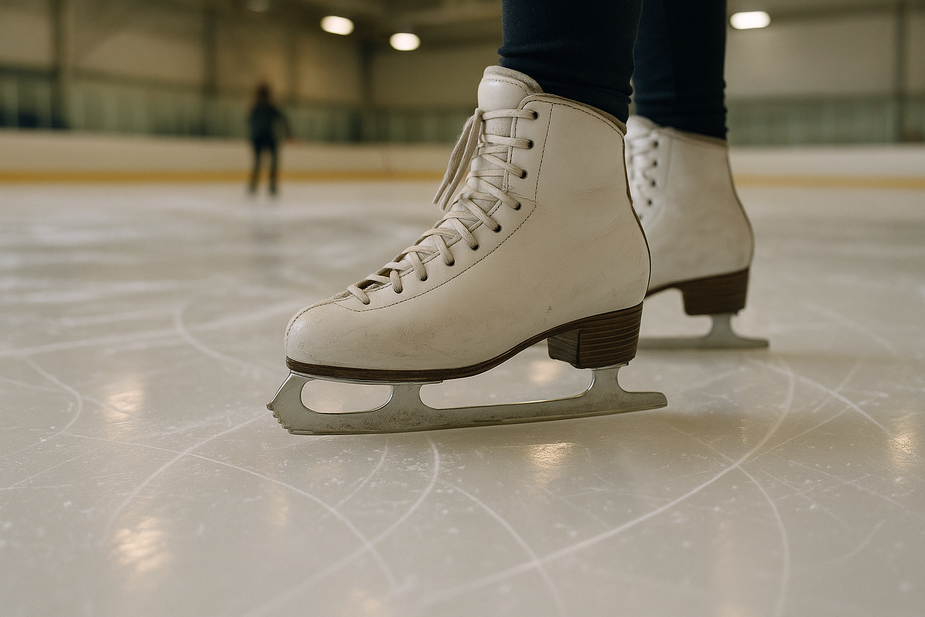
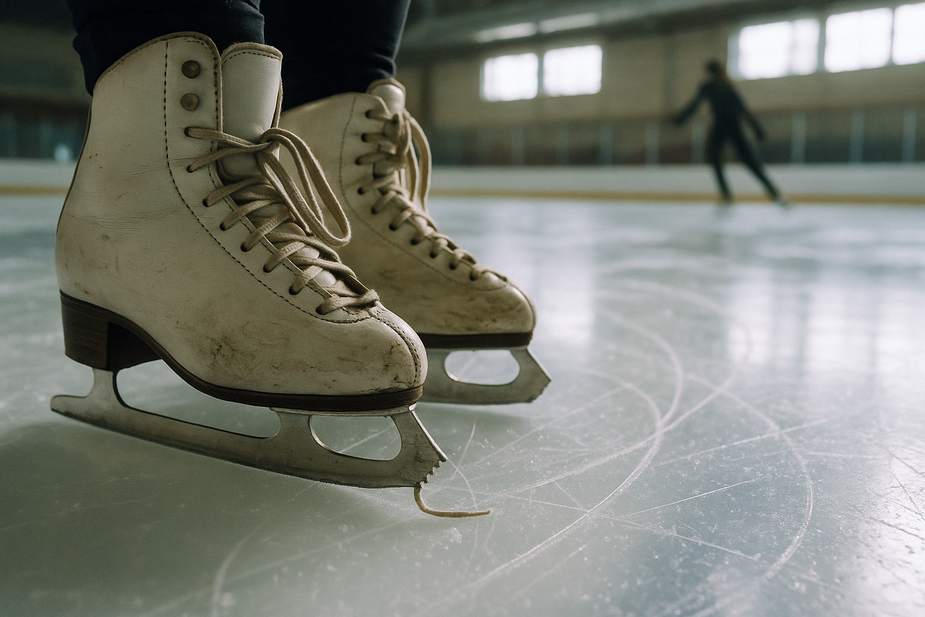
In a flip, the toe pick refers to the pick of the free foot — the foot that’s about to become your landing foot. That toe plants into the ice behind you, and it’s what triggers the vault into the air.
Why Toe Pick Timing Is Everything
Here’s the single most important technical point in this entire post: your body should already be rising before the toe fully engages with the ice. The pick is a quick trigger, not a moment to sit down and load your weight into it.
My go-to cue with students: ‘your jump should already be going up when your toe hits.’
When the timing is right, here’s what happens mechanically: the pick lands under your hip, your edge does most of the loading and power-generation work, and the toe just finishes the job and helps rotation start. When the timing is off, the toe ends up doing work it was never meant to do alone, and the jump feels heavy and disconnected.
Common Toe Pick Errors and Fixes
- Picking too early: the pick enters before the edge is fully established, so the jump feels stopped or under-rotated. Fix: hold the back inside edge a beat longer before you reach back for the pick.
- Picking too late: you ride the edge too long, then scramble to get the pick in, which leads to a rushed, inconsistent air position. Fix: start the reach earlier in the edge sequence — don’t wait until the edge is running out.
- Picking with the wrong part of the blade: using the middle of the blade instead of the true toe pick loses that crisp, clean vault feeling. Fix: check your pick placement with slow-motion video or slow walk-throughs off ice speed.
- Wrong position relative to the circle: picking too far outside or inside the curve of your edge. Fix: circle drills (I’ll walk through these below) train the correct relationship between the pick and the curve.
- Insufficient commitment at the pick: a soft ‘tap’ instead of a firm, quick press kills your lift before the jump even starts. Fix: think ‘quick and decisive,’ not tentative — the pick should be confident, not cautious.
Cues for Clean Pick Timing
Visual cue: picture the toe landing directly under your hip, not trailing behind your body line.
Kinetic cue, in sequence: back inside edge → pressure building under the skating foot → gentle reach → a brief pivot-like feeling right at the pick → up.
The Flip Jump Takeoff — From Pick to Launch
The Full Sequence, Step by Step
- Controlled back inside edge, skating knee bent and weight balanced.
- Reach back with the free leg, toe pointed down, weight still on the skating foot.
- Feet draw together as the toe pick enters the ice under the picking hip.
- Vault upward off the pick and edge together — rotation begins, legs extend.
This whole sequence should feel like one continuous upward motion. If there’s a pause-then-jump feeling anywhere in there, that’s exactly where the timing is breaking down.
How Edge Control Before the Pick Affects the Takeoff
If your back inside edge isn’t secure and weight-balanced before the reach, the jump can drift toward a lutz-like edge or just become generally unstable. This is one reason flip and lutz technique sometimes get blurred in a skater’s own body — the edge wasn’t clean enough to tell the difference.
My cue here: check that you’re solidly on the inside edge, not flat and not drifting toward the outside edge, before the reach even starts. The edge decision has to be made early.
Hips and Core — Staying Connected Without Over-Rotating
The picking foot should land so the toe pick sits essentially under the picking hip. That’s what keeps the whole takeoff ‘stacked’ and efficient.
Common mistake: twisting the hips early, before the pick actually happens. This pulls skaters off their edge or causes pre-rotation, which usually shows up later as an unstable landing. Fix it: keep your hips aligned with the direction of the edge all the way through the reach, and let rotation begin only as the pick sets into the ice — not before.
Arm and Free-Leg Carriage
Your arms should be relatively controlled and closed at the moment of takeoff. Wide or swinging arms disrupt both timing and balance right when you need them most.
Your free leg swings back for the pick, then draws in quickly to build a compact position for rotation. The key coaching detail: coordinate the arm-close and the leg-draw so they happen together. If one lags behind the other, the whole takeoff feels a beat off.
How to Tell If Your Takeoff Is Clean or Sloppy
Signs of a clean takeoff:
- Continuous flow from edge to pick to jump, no breaks.
- A quick, precise pick — not a lingering one.
- Lift that clearly comes from under the hip.
Signs of a sloppy takeoff:
- Audible scraping right at the pick.
- An obvious pause or ‘sitting’ moment on the toe.
- A visible edge change or lean happening right before takeoff.
Flip Jump Drills to Fix Toe Pick and Takeoff Timing
Edge and Position Drills
- Slow entry walk-throughs: skate the three-turn or mohawk into the back inside edge, then stop completely and check your body position — no jump attached yet. This isolates the edge quality from everything else.
- Circle drills: skate a hockey circle and practice picking at different points relative to the curve — further inside the circle versus wider — to train the correct inside-edge relationship for your pick.
Pick Timing Drills
- Back inside edge + toe pivot: glide on the back inside edge, then pivot on the toe pick without jumping at all. This lets you feel the correct pressure and position before you add any height.
- ‘Feet together before pick’ drill: practice drawing your feet together and beginning to rise before the toe fully touches the ice. This reinforces that the lift has to start first, with the pick just finishing it off.
Takeoff Drills
- No-pause rule: practice small, low flips with one single focus — eliminating any pause or loading on the picking leg. The goal is an immediate rise right after the pick.
- Only progress from small, low flips up to full-size flips once that timing feels automatic, not something you have to think through consciously.
Using Video to Diagnose Timing Problems
Video is one of the most useful tools I recommend to families, because timing problems happen fast and are hard to feel accurately in real time. When you review footage, look for:
- Is the back inside edge clearly visible before the pick happens?
- Do the feet draw together before or after the toe touches the ice?
- Is the pick landing under the hip, or is it trailing behind the body?
- Are the arms staying controlled through takeoff, or swinging wide?
Progression Ladder (Full Sequence)
- Edge-only drills — entry into the back inside edge, checking balance and position.
- Edge + toe pivot drills.
- Walk-through flips — edge, reach, and pick, with no jump attached.
- Small, low flips focused purely on timing, not height.
- Full-power flips once timing and edge control are consistently correct.
Why Does Flip Jump Technique Break Down? (Troubleshooting)
Most flip breakdowns trace back to one of two habits.
Rushing entries is the first one. A rushed entry usually means a shallow or undefined back inside edge, which makes it much easier to pick from the wrong spot or accidentally change edges without noticing.
Overreaching is the second. Reaching too far back with the free leg pulls the pick away from that under-hip position, which weakens the lift and makes timing inconsistent from attempt to attempt.
There’s a snowball effect at play here that’s worth understanding: a poorly placed pick leads to weak rotation initiation, which then leads to an unstable landing. The whole jump really does start from the base up — the edge and the pick, not the air position.
As for when to work on this with a coach versus drilling it on your own: technical corrections like edge angle, pick placement, and arm position are best refined first with a coach’s trained eye, since these details are genuinely hard to self-diagnose from the inside. Once those cues are clear and you understand exactly what you’re feeling for, independent repetition paired with video review is what locks the correction in for good.
Repetition is what makes correct edge-to-pick-to-rise timing automatic — but it has to be correct repetition. Rushed or occasional attempts at the right technique won’t build the same consistency as steady, focused reps.
Bringing It All Together
Clean flip jump technique isn’t about one magic cue — it’s three connected pieces working together: a secure back inside edge, a well-timed toe pick landing under your hip, and a takeoff that’s already rising as that pick touches down. Get those three things talking to each other correctly, and the flip stops feeling like a mystery.
I coach skaters through exactly this process year-round out here in the Bay Area, and I can tell you the skaters who improve fastest aren’t the ones with the most natural jump — they’re the ones willing to slow down, drill the pieces, and let the timing become automatic. If you want to see how I approach coaching skaters through technical building blocks like this one, I’d love for you to take a look. Keep working the edge, trust the timing, and the flip will come together.
Frequently Asked Questions
Why does my flip jump feel like it’s stopping instead of flowing?
This almost always points to picking too early or too late relative to your back inside edge. If the pick lands before the edge is fully established, the jump feels stopped short. Slow down your entry and check the timing with the ‘reach, then gather’ cue.
Why is my flip turning into a lutz?
This usually means your back inside edge isn’t secure before the pick — it’s drifting flat or toward an outside edge. Focus on holding a clear, deep back inside edge through the reach, before you even think about the pick.
How do I stop scraping my toe pick on a flip?
Scraping usually means the pick is landing with the wrong part of the blade or too tentatively. Aim for a quick, decisive press with the true toe pick, placed under your hip rather than trailing behind you.
How long does it typically take to fix flip jump technique?
It varies by skater, but consistent, correct repetition matters far more than total time on the ice. Working through the drill progression — edge, then pivot, then walk-through, then small flips, then full flips — tends to build lasting change faster than jumping straight to full-speed attempts.
Should I practice flip jump drills without a coach watching?
Independent drilling is valuable once you clearly understand the correction you’re working on. But for the first pass at fixing edge angle, pick placement, or hip alignment, it helps enormously to have a coach’s eye confirm what you’re actually doing versus what you feel like you’re doing.