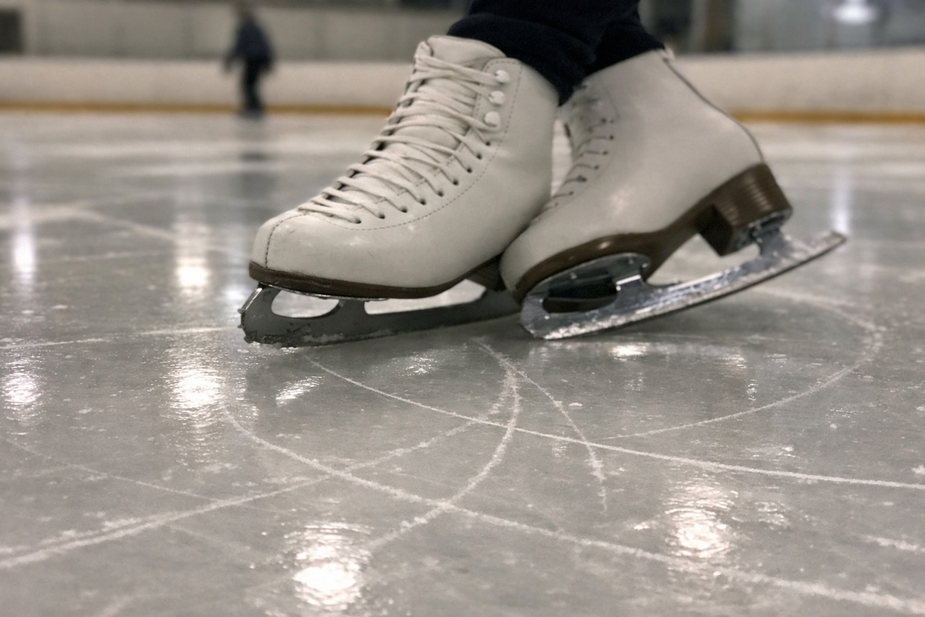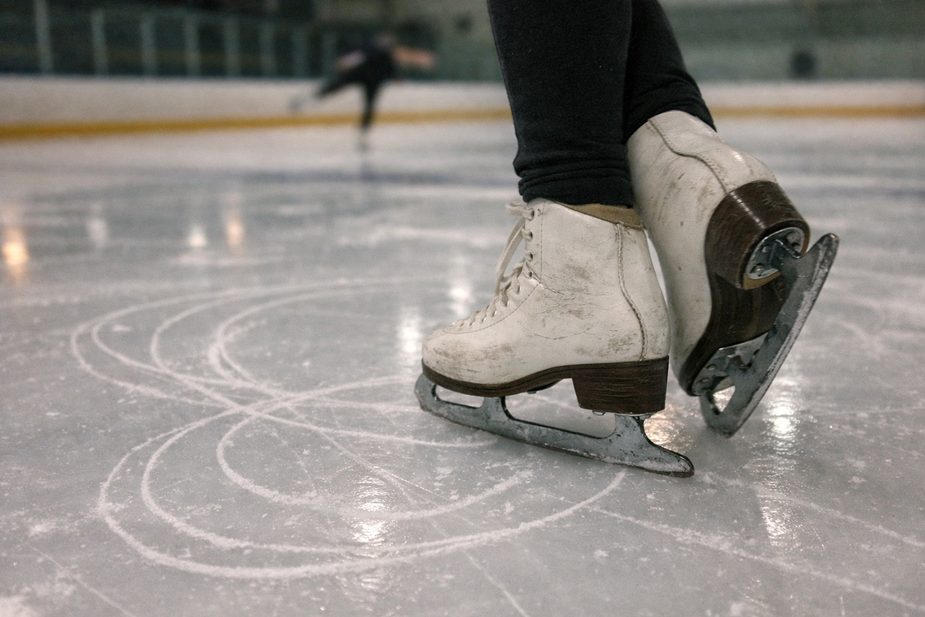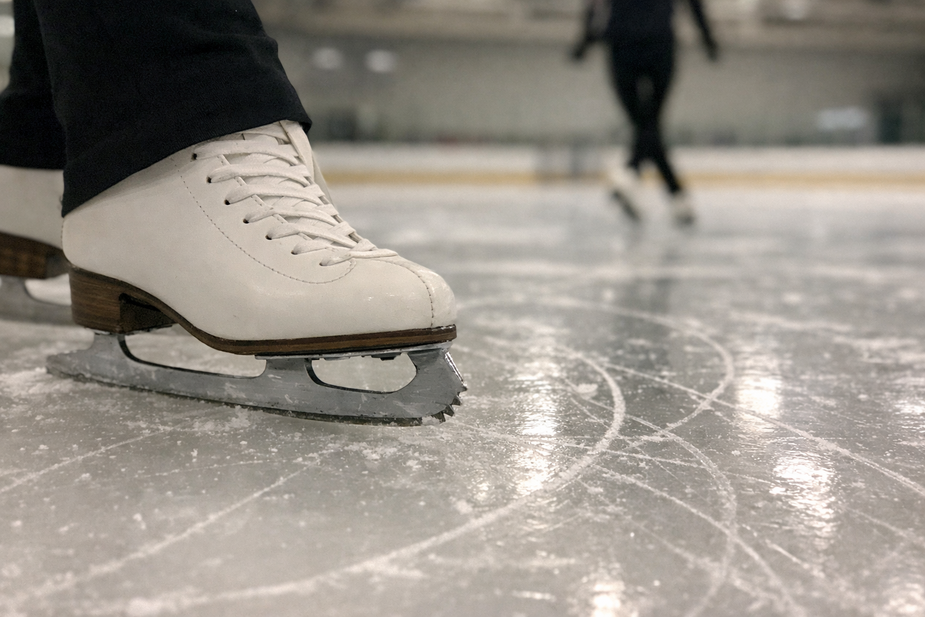
A step sequence in figure skating is a required choreographed element combining steps, turns (three-turns, mohawks, brackets, counters), and edge changes performed across the ice to music. Skating one cleanly means prioritizing edge control, clear foot placement, and flow over raw speed or difficulty. The judges can tell the difference instantly — and so can the skater.
I’ve coached step sequence figure skating technique from a skater’s very first three-turn all the way through competitive footwork at the juvenile and intermediate levels. The technical breakdowns I see are almost always the same handful of issues, and the fixes that work are almost always the same too. This guide walks through what a step sequence actually is, how it gets judged, and exactly how I train one with my skaters so it holds up under pressure.
What Is a Step Sequence in Figure Skating?
A step sequence is a planned series of steps and turns, linked into one continuous element, that travels across the ice to music. It’s not improvised — every turn and edge change is choreographed and rehearsed until it’s repeatable.
The building blocks skaters draw from include:
- Steps (placing the free foot on the ice)
- Three-turns
- Mohawks
- Brackets
- Rockers
- Counters
- Twizzles (primarily in dance)
- Edge changes
- Changes of direction
Here’s a distinction I make with every student early on: a step is when the free foot touches down on the ice, while a turn is when the skating foot itself changes direction without lifting off the ice. It sounds like a small detail, but it matters technically — judges and coaches are both watching for which turns are actually being executed versus which are just transitional steps. Knowing the difference helps a skater understand what they’re actually performing, not just where their feet are going.
Patterns can run diagonal, straight-line, circular, or serpentine, depending on what the event requires. Rules around step sequences shift by level and by season, so I always tell parents and skaters: don’t memorize a rule from last year and assume it still applies — check current requirements with your coach before building the pattern.
Step Sequence vs. Spiral Sequence vs. Transitions
These three get mixed up constantly, so here’s how I explain it on the ice.
A step sequence is connected steps, turns, and edges performed through a defined pattern — it’s its own scored element. A spiral sequence is built around sustained spiral positions, not footwork; it’s judged on different criteria entirely. Transitions are the connective movements — crossovers, spread eagles, and similar linking moves — that join one element to the next, but they aren’t scored as a standalone element on their own.
I put it this way for my students: transitions are the connective tissue of a program, but a step sequence is its own spotlight moment. When the music hits that section, all eyes are on the footwork — there’s nowhere to hide.
Why Step Sequences Matter in Competitive Footwork Skating
Step sequences matter because they reveal raw skating skill with nothing else to lean on — no jump, no spin, just the skater and the ice. Judges assess two separate things here: the technical level, meaning whether the required features were actually completed, and the Grade of Execution (GOE), a scale that runs from negative to positive around a zero base depending on quality.
Step sequences are required elements in both singles and pairs skating, and in ice dance they’re central content alongside the pattern dances.
Here’s the coaching reality I share with every skater who’s ready to add competitive footwork: a step sequence cannot hide weak basic skating. If your edges are shallow or your turns are inconsistent, a step sequence will expose it faster than almost any other element in the program. That’s exactly why I spend so much time on basic skating skills long before a skater is ready for competitive-level footwork — the sequence is only as good as the skating underneath it.
The Anatomy of a Strong Step Sequence (Technique Breakdown)
Edge Quality and Control
A clean edge has a visible curve in the tracing left on the ice, stable alignment through the ankle and knee, and no scraping or flat spots. That curve is the whole story — if the blade is flat, there’s no edge, just a line.
The most common mistake I see: skaters ‘cheat’ an edge by riding flat through a turn when they’re tired or rushing the pattern. It usually shows up exactly where the skater is thinking about what comes next instead of what they’re doing right now.
My cue for this: ‘Deep edge, quiet shoulders.’ When a skater commits to the lean and keeps the upper body calm, the edge quality improves almost immediately.
Drill: have the skater trace the pattern slowly, one foot at a time, before ever putting the full sequence together at speed. Isolating each foot removes the guesswork.
Clear, Identifiable Turns and Foot Placement
Every turn — three-turn, mohawk, bracket, counter — should finish cleanly on the correct edge without a correction step. If a skater has to adjust or shuffle after landing a turn, it’s not finished yet.
The common mistake here is ‘muddy’ footwork, where steps blend together and a judge genuinely can’t identify which turn just happened. This is one of the most frequent notes I give.
Fix: break the sequence into small two- or three-step chunks and have the skater say each turn name out loud while skating it slowly — ‘three-turn… mohawk… bracket…’ It sounds basic, but naming the turn forces the brain and the blade to agree on what’s happening.
My cue: ‘Place the free foot.’ That one phrase fixes a surprising number of muddy sequences on its own.
Speed and Flow
Speed should come from efficient skating — crossovers, edge depth, strong pushes — not from rushing the feet. This is one of my step sequence tips I repeat constantly: speed is a byproduct of good technique, not a shortcut around it.
The common mistake is adding speed before the pattern is reliable. The result is flattened edges and shortened, rushed turns that don’t finish.
My rule of thumb: add speed only after the tracing is consistent at a slow pace. Good flow looks like continuous movement with minimal stopping and smooth acceleration and deceleration — never a burst of speed followed by a scramble to catch up.
Upper Body Position and Carriage
Posture, arms, and head should support the footwork, not distract from it. I follow a strict priority order with every student: first, the correct edge and turn; second, reliable foot placement; third, body position; fourth, expression and musicality.
The common mistake is adding arm choreography before the feet are accurate. When that happens, the arms often pull focus and the feet fall apart underneath them. Footwork sequence technique has to be locked in before it gets dressed up.
How Step Sequences Differ Across Singles, Pairs, and Ice Dance
| Discipline | Focus | Key Challenge |
|---|---|---|
| Singles | Individual turns, edges, speed, ice coverage, musical interpretation | Consistency across the full pattern alone |
| Pairs | Coordinated timing, matched edges and turns, spacing, unison | Preserving individual skating quality while matching a partner |
| Ice Dance | Precision, holds, shared timing, pattern accuracy, musical character | Executing required patterns and tempos together |
In singles, it’s entirely on the skater — their turns, their edges, their ice coverage, their musical choices.
In pairs, skaters must preserve their own individual skating quality while also matching timing, edges, turns, and spacing with a partner. One important note I give pairs teams: if the partners differ in level on a particular feature, the team is generally credited at the lower level achieved — which is exactly why both skaters need to train the footwork to the same standard, not just the stronger one.
In ice dance, the emphasis shifts even further toward precision — holds, shared timing, pattern accuracy, and musical character all carry heavy weight. The rhythm dance adds another layer, since it involves predetermined patterns and required tempos that both partners must match exactly.
Common Step Sequence Problems and How I Fix Them
Here’s what I actually tell my skaters when these issues show up — and they show up with almost everyone at some point.
Losing Edge Quality at Speed
Problem: Clean edges in slow practice, but the blade goes flat once the skater speeds up.
Fixes:
- Temporarily slow the sequence back down and rebuild it
- Mark the exact entry and exit edge for each turn
- Practice the hard section starting from a controlled crossover entry
- Use the cue ‘deep edge, quiet shoulders’
- Only increase speed again once the tracing is consistent
Muddy or Rushed Footwork
Problem: Steps blur together, turns aren’t identifiable, or the skater starts the next step before finishing the current one.
Fixes:
- Break the sequence into small step groups
- Call out each step name out loud during slow practice
- Skate to a metronome or counted rhythm
- Rehearse the feet without arms first, then add arms later
Drifting Off the Pattern
Problem: The sequence travels too narrow, or veers off its intended path across the ice.
Fixes:
- Use rink landmarks — blue line, hash marks, shared-rink markings — as choreography checkpoints
- Review video from the side to see the actual pathway
- Identify the specific turn causing the drift and fix its entry edge, rather than forcing the exit
Breakdown in the Second Half
Problem: The final section gets smaller, slower, or less precise as the sequence wears on.
Fixes:
- Divide the sequence into beginning, middle, and end checkpoints
- Practice the ending section first, while the skater is technically fresh
- Eventually perform the full sequence after other program elements, to build reliability under fatigue
- Give one or two corrections max per run — not a laundry list
Footwork That Feels Disconnected From the Music
Problem: The steps are technically accurate but don’t feel musical.
Fixes:
- Identify the musical phrase before assigning any accents
- Match specific turns or direction changes to key beats
- Count the rhythm aloud while drilling
- Add expression only after the rhythm is locked in
How to Practice a Step Sequence Cleanly (Step-by-Step Method)
This is the method I use with nearly every skater, from their first competitive footwork sequence onward.
- Map the sequence. Diagram it in simple terms the skater understands — right outside edge, three-turn, mohawk, bracket, crossover entry. The goal is to make the pathway visible, not complicated.
- Divide into sections. Entry, first turn combination, center section, direction-change section, final musical phrase — each one gets its own single technical goal.
- Practice slowly first. Slow repetition makes it easy to check whether each turn finishes on the correct edge and the free foot lands accurately. Keep the pathway and rhythm correct even at slow speed — don’t let it get sloppy just because it’s slow.
- Add speed in stages. Move from deliberate learning speed, to comfortable training speed, to program speed, to performance speed under pressure. Only move up a stage once the current one is dependable.
- Rehearse with music. The skater should know exactly where the sequence starts, which musical phrase drives it, where the accents fall, where it ends, and what comes right after in the program.
- Use video review. Watch for flat edges, narrow ice coverage, unclear turns, excess upper-body movement, or — for pairs and dance — timing differences between partners. Focus on one or two priorities per review session, not everything at once.
- Use short, specific cues. Some I use constantly: ‘Finish the edge.’ ‘Place the free foot.’ ‘Stay over the blade.’ ‘Hold the curve.’ ‘Quiet shoulders.’ ‘Show the direction.’ ‘Match the rhythm.’
I built this approach over years of coaching experience working with skaters from their very first turns through competitive footwork, and the order matters as much as the drills themselves. Skip a stage and the sequence looks fine in practice but falls apart under program pressure.
Taking a Step Sequence From Practice to Competition
A step sequence is competition-ready when the skater can perform it reliably starting from the program’s actual entry point, at full speed, with the real music and choreography — not in isolation.
Practical prep includes rehearsing the exact entry and exit from the element that comes right before it, running it under full-program conditions, and simulating restarts or interruptions in practice so nothing rattles the skater if something unexpected happens on competition day.
Before stepping onto the ice, I run this checklist with my skaters:
- Where does the sequence begin?
- What edge starts the first turn?
- What musical phrase controls the middle section?
- Where’s the most demanding turn in the pattern?
- What’s the final direction before it ends?
- What element comes right after it?
One more coaching note on placement: a sequence placed after demanding elements needs stronger pacing and focus, since the skater will already be working against fatigue. A sequence placed earlier in the program can set the technical tone for everything that follows. Either way, that’s a choreography decision made together with your coach, based on the skater’s strengths.
Frequently Asked Questions
How long should a step sequence be?
There’s no single universal length — duration and pattern requirements depend on the discipline, the level, and the current season’s rules. It should be long enough to meet those requirements while staying clear, controlled, and fully committed from start to finish.
What’s the difference between a step sequence and a spiral sequence?
A step sequence is built from connected steps, turns, and edge changes. A spiral sequence is built from sustained spiral positions instead. Whether either is required in a program depends on the specific event rules for that level and season.
Can step sequences be performed in pairs or ice dance?
Yes. Pairs include step sequences as a required element with heavy emphasis on unison and coordination between partners. Ice dance features step sequences prominently, with particular focus on pattern accuracy, holds, shared timing, and musical interpretation.
Why do judges seem to score similar-looking step sequences so differently?
Because what looks similar to a parent in the stands often isn’t similar at all up close. Small differences in edge depth, how cleanly a turn finishes, and whether the free foot placement is precise all affect both the technical level and the Grade of Execution — and judges are trained to catch exactly those details.
What’s the fastest way to improve a messy step sequence?
Slow it down before you speed it up. Almost every ‘messy’ step sequence I’ve worked on improves fastest by going back to slow, isolated practice — one foot at a time, turns named out loud — rather than trying to muscle through it at full speed until it magically cleans up. It won’t.
A step sequence rewards patience more than almost any other element in figure skating. Build the edges first, then the turns, then the speed, then the artistry — in that order — and the footwork that once felt overwhelming starts to feel like the most confident part of the program.