Salchow Jump Technique: How to Build a Clean, Consistent Salchow
Clean salchow jump technique starts with a controlled back inside edge on the takeoff foot, held long enough to establish balance and direction. The free leg swings forward and around to create rotation, the skater rises without rushing, and the jump finishes on a back outside edge. Timing and edge control matter more than force.I get some version of the same question almost every week at the rink: ‘Why won’t my salchow feel solid?’ Sometimes it’s a parent asking why the jump looks rushed. Sometimes it’s the skater herself, frustrated that she can land it in practice but not in a program.Here’s what I tell all of them: the salchow isn’t just ‘one of the six jumps’ a skater checks off a list. It’s a foundational edge jump. It teaches timing, balance, and body control that every jump after it depends on. If the salchow is built on solid habits, everything downstream — including double salchow later on — gets easier.In this post I’m breaking figure skating salchow technique into three pieces that actually matter: the takeoff edge, the rotation, and the landing. Get those three things working together, and the jump stops feeling like a fight.
What Is a Salchow Jump in Figure Skating?
A salchow is an edge jump — meaning the skater launches entirely off the curve of a skate blade, with no toe pick assist. That’s the key thing that separates it from toe jumps like the toe loop or flip, and it’s why edge quality gets so much attention in salchow training.The full sequence looks like this, in order:
- Entry from a turn, most commonly a three-turn, which sets the skater’s body and blade into position
- A back inside edge on the takeoff foot
- The free leg swinging through to generate rotation
- Rotation in the air
- Landing on the back outside edge of the opposite foot
Coaches introduce the salchow early in a skater’s development for a reason. It forces the skater to actually feel and control an edge rather than skate over it. That edge awareness — knowing where your weight is, what curve you’re riding, and how your body is aligned over the blade — transfers directly into every jump that comes later. A skater with a clean salchow foundation almost always has an easier time learning the loop and eventually double rotations, because the edge discipline is already there.
What Is the Correct Salchow Takeoff Edge?
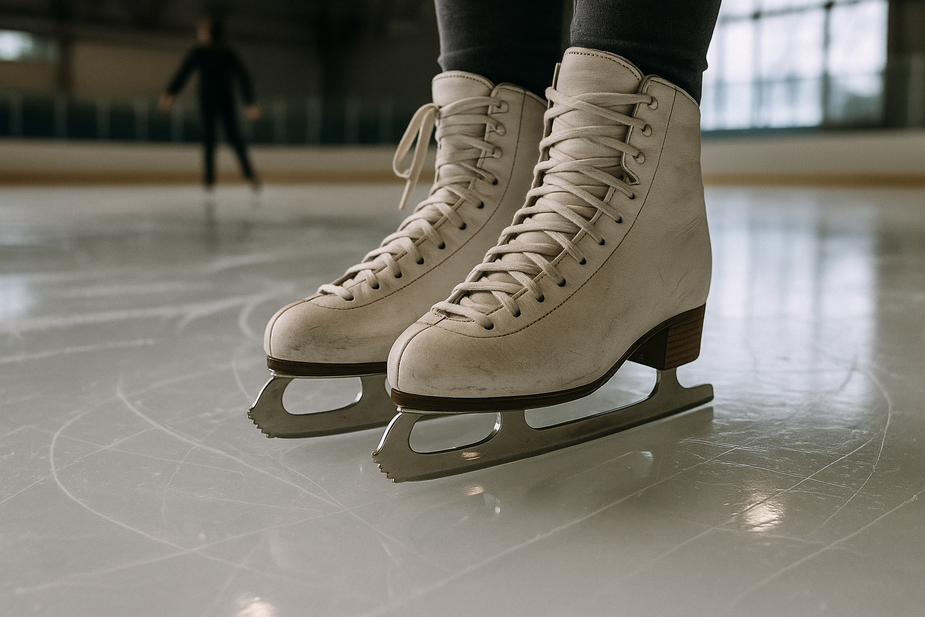
The salchow takeoff edge is the back inside edge of the skating foot. Full stop — that’s the edge, and getting comfortable on it before adding rotation is what separates a clean jump from a scratchy one.’Holding the edge’ means something specific in my coaching vocabulary. It means the skater settles into the curve of that back inside edge, feels the balance and direction it creates, and lets that edge do some of the work — before the free leg starts swinging. This is not a rushed skid into liftoff. It’s a moment of control.Compare that to what I see most often with skaters who are struggling: a shallow or flat edge. When the edge isn’t deep enough, the jump looks scratchy on takeoff and the skater ends up muscling the rotation with their upper body instead of using the natural energy the edge provides. It’s more effort, less result — exactly backward from what we want.Two common mistakes I see constantly:
- Rushing the turn straight into the jump, with no settled edge at all. The fix is to slow everything down. Practice edge holds without jumping until the skater can feel the curve under their blade before doing anything else.
- Rolling onto the wrong edge — outside instead of inside. This gets fixed with edge-only drills, isolated first on two feet, then on one foot, before we ever add the jump back in.
Drills I use in almost every lesson at this stage:
- Edge holds in a straight line. The skater glides on the back inside edge for several seconds, holding a checked upper body position, before stepping out of it. No jump — just building the feel for the correct curve.
- Three-turn into edge hold. Practice the entry turn, then hold the resulting back inside edge for a count of ‘1-2-3’ before continuing to glide out. This teaches the skater to stop rushing straight from the turn into liftoff, which is one of the most common reasons salchows fall apart before they even leave the ice.
How Does Rotation Work in a Clean Salchow?
Clean salchow rotation comes from a settled edge, a checked upper body, and a free leg that swings through an arc to generate turning force — not from muscling the shoulders around. Get the sequence right and the rotation almost happens on its own.Here’s the full sequence I coach, step by step:
- Settled edge — the skater has established balance on the back inside edge
- Check position — the shoulders and upper body are held opposite the direction of rotation
- The free leg swings forward and around
- Arms and free leg work together to build rotational momentum
- The body draws inward into a tighter position once airborne
- The skater checks out of the rotation on landing to finish stable
The free-leg action deserves its own attention because skaters often get this part wrong. The leg doesn’t just lift up — it swings through an arc that actually helps generate the turning force. I want my skaters to feel the leg leading the rotation. The shoulders shouldn’t be yanking the body around; if they are, something upstream in the technique needs fixing.That leads to ‘the check,’ which is one of the most important concepts in this jump. Checking means holding the upper body and shoulders against the direction of rotation just before takeoff. Without it, a skater either starts spinning too early — what we call pre-rotation, rotating on the ice instead of in the air — or loses control once airborne.On the ice, I use the same cue language over and over: ‘wait.’ ‘Check.’ ‘Swing through.’ ‘Don’t throw it.’ Those four phrases fix ninety percent of rotation problems I see.Common mistakes and how I fix them:
- Collapsing the upper body or throwing the free arm too early, which causes pre-rotation on the ice before the skater ever leaves it. Fix: shoulder-check drills with no jump at all — just the edge-and-check pattern, repeated until it’s automatic.
- Rotating too slowly, or muscling the jump with the arms instead of using the free-leg swing. Fix: isolate a stationary free-leg swing drill off the edge, with the skater focusing entirely on leg-driven momentum rather than arm effort.
Drills that build this without overwhelming a skater:
- Two-foot rotation practice (no jump). The skater practices the check-and-swing sequence standing still or moving slowly, internalizing the timing before we ever add a real takeoff.
- Half-rotation salchow attempts. I’ll often have a skater land after a controlled half-rotation. This isolates the takeoff edge and the initial swing without asking for the full rotation yet — a great way to diagnose exactly where things are breaking down.
How Do You Practice a Salchow Step by Step?
To do a salchow: enter from a three-turn onto a back inside edge, hold the check position, swing the free leg forward and around while the arms coordinate, rise into the air without forcing it, rotate in a compact controlled shape, and land on the back outside edge of the opposite foot with a clean check.Written out as a full sequence:
- Approach with a clean entry turn — commonly a three-turn — to set up the back inside edge correctly
- Settle onto the back inside edge, holding the check position and feeling balance and direction before doing anything else
- Swing the free leg forward and around, with the arms coordinating in the same direction
- Rise from the edge into the air without an early or forced push
- Rotate in a compact, controlled position
- Land on the back outside edge of the opposite foot, checking out of the rotation to finish stable
In terms of when a skater is ready for this, I look at readiness, not age. The salchow is typically introduced once a skater has solid basic edge control and can execute stable turns on their own. We build toward the full jump — we don’t jump straight into asking for a full rotation.The drill progression I use with almost every developing skater goes: edge-only holds, then check-position holds, then free-leg swing drills done off the edge, then half-rotation attempts, and only then the full jump. Skipping steps here is where I see the most frustration and the slowest long-term progress.One more thing worth knowing: the exact same edge and rotation habits carry forward directly into double salchow work down the road. Nothing about the fundamentals changes — the execution just gets tighter, faster, and more precise.
Why Do Salchows Pop or Underrotate?
Salchows pop or underrotate almost always because of what happens before takeoff — a rushed entry, an unsettled edge, or a weak free-leg swing — rather than anything wrong with the landing itself.Popping happens when a skater leaves the ice before the edge and body alignment are properly established. The jump loses height, loses flow, and often looks abrupt. Nine times out of ten, I trace this back to a rushed entry or an edge that was never really held in the first place.Underrotation usually comes from a rushed takeoff, an insufficient free-leg swing, or a loose, uncontrolled body position in the air instead of a tight rotational shape. The skater is airborne, but the mechanics that should be creating rotation just aren’t fully engaged.Here’s the coaching point I repeat constantly: an unstable landing is rarely a landing problem. It started earlier — usually in the edge quality or the timing of the takeoff. I always encourage parents and skaters to look at the beginning of the jump, not just the finish, when something feels off.Quick fixes, depending on what’s happening:
- If the jump is popping: slow the entry down and re-drill the edge hold before adding rotation back in
- If the jump is underrotating: isolate the free-leg swing and check position separately, then reintroduce the full rotation once each piece feels solid on its own
- If the landing feels unstable: go back to edge control and the checked position rather than trying to ‘fix’ the landing directly — the landing is usually a symptom, not the actual problem
Salchow vs. Other Jumps — Where Does It Fit in Jump Progression?
The salchow is an edge jump, taking off from a back inside edge, which makes it a useful technical contrast once a skater starts learning toe-assisted jumps like the toe loop or flip. Understanding that difference early helps skaters recognize what each jump actually demands from their edges and body position.The same edge discipline and checked-position habits built through salchow training carry over and support jump work later on — they don’t just apply to this one jump. That’s part of why I treat it as a cornerstone rather than a box to check.The salchow is commonly treated as a standard early jump in a skater’s progression, though I want to be honest here: the exact order can vary from skater to skater and coach to coach. I’m not going to pretend there’s one universal sequence every skater must follow — there isn’t. What matters more than the order is whether the fundamentals are solid before moving forward.
A Coach’s Perspective — Why Patience Matters More Than Speed
After coaching skaters through this jump for years — from their very first wobbly edge holds through to more advanced rotation work — I can tell you the salchow rewards repeatable mechanics, not effort or force. Skaters who try to muscle their way into rotation almost always plateau. Skaters who master the edge, the check, and the timing tend to keep progressing.This is part of the long-term approach I bring to every skater I work with, which you can read more about on my coaching philosophy page. Fundamentals built patiently now — clean edges, honest checks, controlled swings — make harder rotations down the road, like double salchow, genuinely more attainable. Not guaranteed, but more attainable, because the technical habits are already there.To parents watching from the boards: I know it’s tempting to want your skater to ‘get the jump’ faster. But consistency in this sport comes from patient repetition of fundamentals, not from pushing harder or rushing the process. A skater who takes the time to really own their edge will look back and be glad they didn’t skip that step.
Frequently Asked Questions
What is the difference between a salchow and a lutz takeoff edge?
The salchow takes off from a back inside edge, while the lutz uses a different takeoff edge pattern entirely. Both jumps depend heavily on edge discipline, which is why edge quality gets so much attention in training for each of them.How long does it typically take to land a salchow consistently?
There’s no fixed timeline. Consistency comes from edge control, timing, and repetition — not a set number of lessons or weeks. Every skater progresses at their own pace, and that’s completely normal.Can a skater learn salchow before mastering loop or axel?
The salchow is commonly introduced as a standard early jump in a beginner’s progression, though the exact order of jumps can vary depending on the individual skater and the coach’s approach.What’s the relationship between salchow technique and double salchow progression?
The technical foundation is identical — back inside edge, free-leg swing, checked rotation. A double salchow simply requires tighter rotational control and more precise timing as the skater adds an additional rotation on top of that same foundation.Why does my skater’s salchow look rushed or scratchy?
This is almost always an edge issue, not a rotation issue. The skater is likely settling onto the edge too briefly, or skidding into the jump instead of holding a controlled inside edge before the free-leg swing even begins.The salchow will teach your skater more than just one jump — it teaches edge control, timing, and body awareness that shows up in everything they do on the ice afterward. Take the time to build it right, one settled edge and one honest check at a time, and the rest of their jump progression gets a whole lot easier to build on.