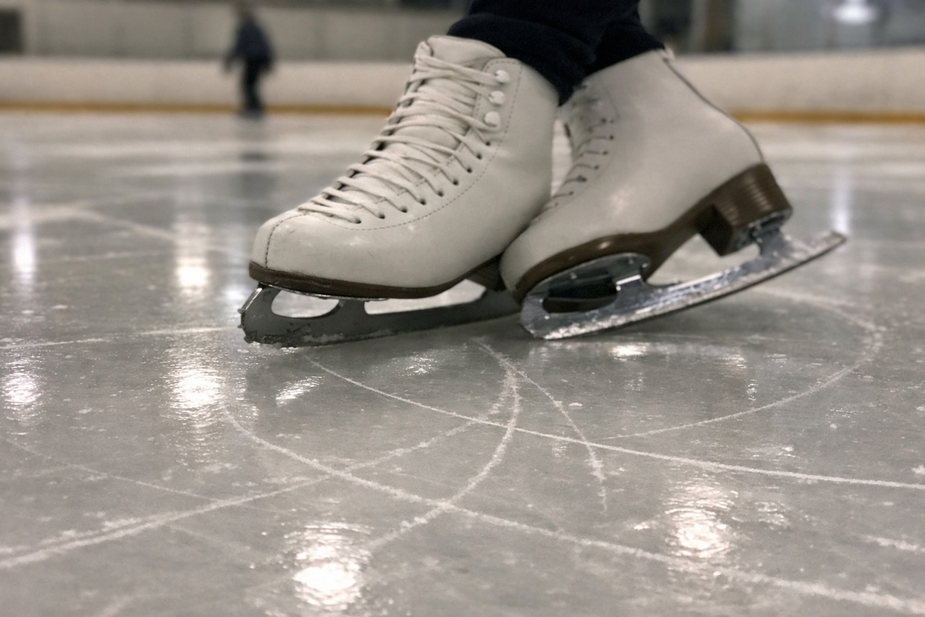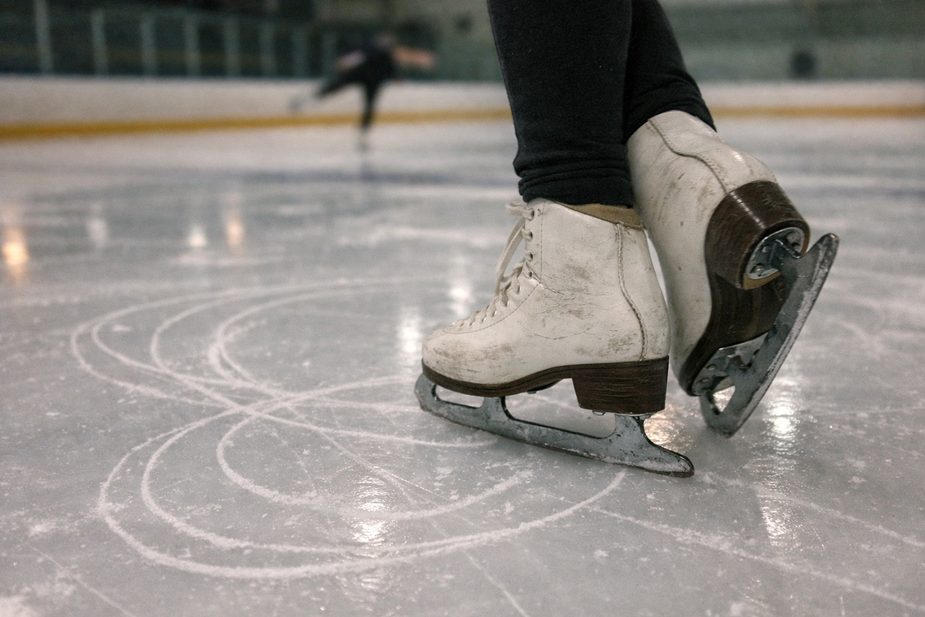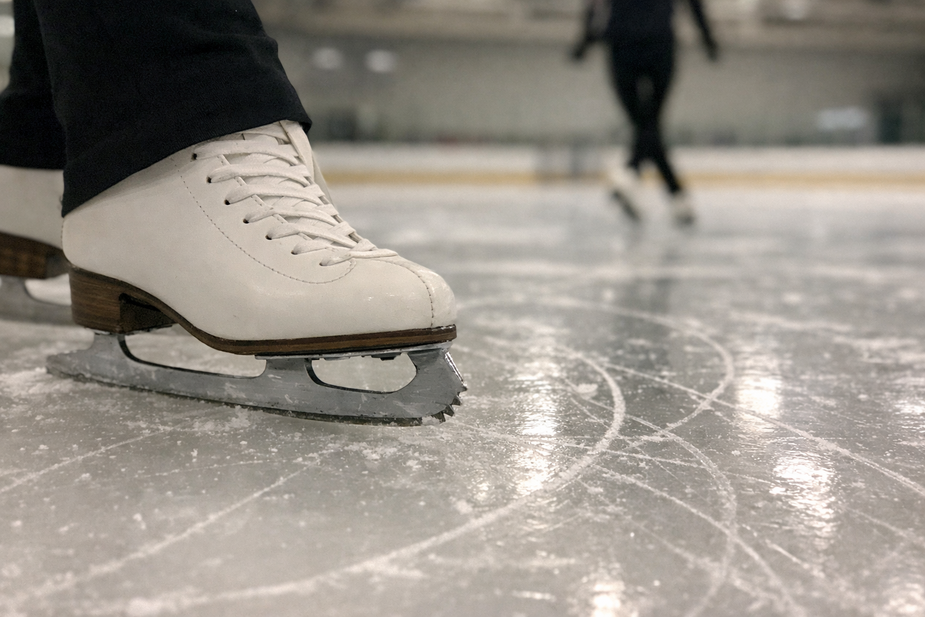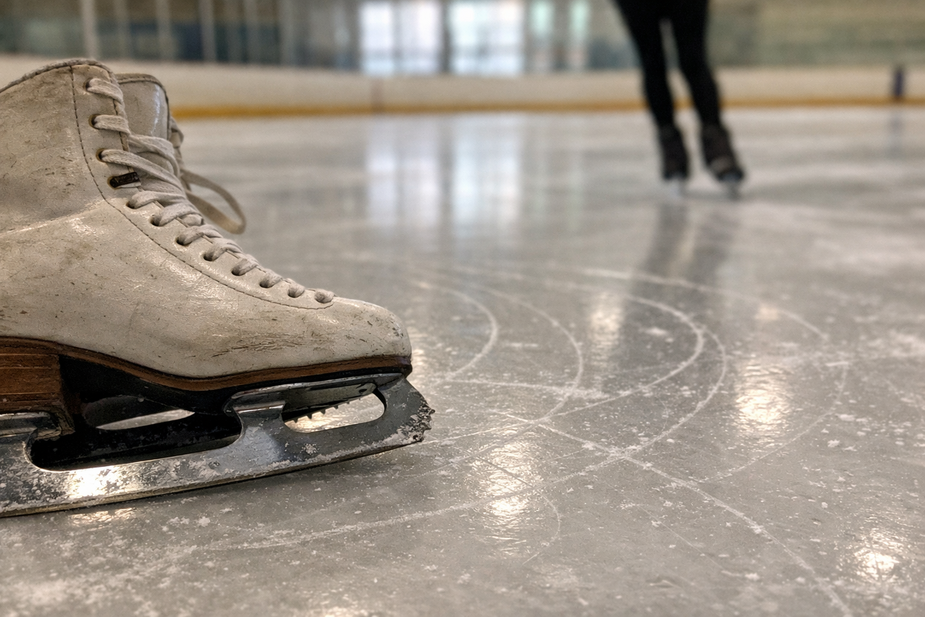
A twizzle in figure skating is a traveling one-foot turn with continuous rotation—the skater rotates while the blade keeps gliding across the ice. To do one, enter on a controlled edge, keep your body stacked over the skating foot, rotate shoulders and hips together, and exit on a clean running edge without stopping.
Every season I get the same question from new ice dance parents and freestyle skaters alike: ‘Why is this one element so hard?’ Twizzles look fast and a little chaotic from the boards, and I understand why they make people nervous. But a well-done twizzle isn’t about speed at all — it’s about control.
I’ve been coaching twizzle figure skating technique for a long time, from a skater’s very first wobbly attempt through competitive-level training, and the pattern never changes. The skaters who struggle are almost always chasing rotation speed before they’ve built the foundation underneath it. The skaters who succeed treat it like what it actually is: a turn that keeps traveling, built in careful layers over time.
In this post I’ll walk through what a twizzle actually is, the foundation skills you need before you even attempt one, a full step-by-step breakdown of the technique, the most common mistakes I see on the ice, and a realistic progression for building this skill properly. This is not a ‘master it this weekend’ skill. Set that expectation now, and the learning process will frustrate you a lot less.
What Is a Twizzle in Figure Skating?
A twizzle is a traveling one-foot turn performed on a clearly recognizable edge, with continuous rotation, while the blade keeps moving across the ice the entire time. That traveling quality is what separates it from almost every other turn in the sport.
Skaters and parents often confuse twizzles with a few other elements, so let me clear that up directly:
- Twizzle vs. spin: A spin rotates around a fixed point on the ice. A twizzle rotates while traveling — the blade never stops moving forward (or backward) across the surface.
- Twizzle vs. three-turn: A three-turn changes edge and direction once, in a single quick motion, then continues on the new edge without further rotation. A twizzle keeps rotating continuously for one or more full turns on the same traveling edge.
- Twizzle vs. step sequence: A step sequence is the broader pattern of turns, edges, and movements across the ice. A twizzle is one specific element that might appear within that sequence — not the whole pattern itself.
In competitive terms, a single twizzle generally involves one full rotation, while a double twizzle involves at least two continuous rotations on that same traveling edge. Skaters also perform twizzle series — multiple twizzles done in succession, with limited steps allowed in between. The entry edge, the number of rotations, and the direction requirements matter for level and scoring, and too many connecting steps or a stationary entry can reduce the technical level awarded.
Twizzles carry heavy weight in ice dance scoring specifically because they reveal so much about a skater’s real skill: edge control, alignment, and rotational technique, all performed while still covering ice. You can’t fake a twizzle with speed or arm-throwing the way you sometimes can mask other issues. The blade tells the truth.
I always tell my students a twizzle is ‘a turn that keeps going’ — not a spin that happens to travel. That one phrase alone fixes more technique problems than almost anything else I say rinkside, because it reorients how they think about the blade’s job throughout the whole element.
What Foundation Skills Do You Need Before Learning Twizzles?
You need strong one-foot edge control on both feet, in both directions, before a twizzle will ever feel stable. Twizzles expose every gap in basic skating skills, so I never introduce them until these pieces are solid.
Here’s what I look for before I start twizzle-specific training:
- Controlled forward and backward edges on both feet — not just the skater’s natural, comfortable side
- Stable one-foot glides with a deliberate, quiet free leg and purposeful arm position — not flailing for balance, but not frozen stiff either
- Solid three-turns, brackets, rockers, and counters — these one-foot turns are literally the building blocks of twizzle rotation
- The ability to change body orientation without collapsing the skating knee or sliding off the center of the blade
- Consistent speed through turns and transitions — no slowing down to ‘set up’ before turning
- Clear blade awareness — always knowing exactly where the active edge is underfoot
I’ll flag one thing parents don’t always expect: equal training on both sides. It’s tempting for skaters to drill their easy foot and easy direction over and over because it feels good and builds confidence fast. But twizzles eventually need to work on both feet and both directions, and skipping the ‘hard side’ early just means a bigger struggle later.
When I talk about core stability in this context, I don’t mean fitness or strength training. I mean keeping the head, shoulders, hips, skating knee, and blade organized as one connected unit over the skating side. It’s a posture and alignment goal — staying centered and adjustable over the blade — not a conditioning concept.
How to Do a Twizzle: Step-by-Step Technique
Learning how to do a twizzle comes down to six coordinated steps, done in order, every single time you practice. Skip a step and the whole thing falls apart somewhere downstream.
Step 1 – Establish the Entry
Start from a controlled edge with enough momentum to carry you through the entire element. A dead-stop entry (outside of a specific controlled drill) tends to produce a weak, stationary-looking twizzle, and in competition that kind of entry can actually reduce the technical level awarded.
A drill I use constantly: mark the entry edge with a line or a cone on the ice, and have the skater hold that exact edge cleanly before initiating any rotation. Know your edge and your direction before you turn — don’t figure it out mid-rotation.
Step 2 – Position Your Body Over the Skating Foot
Your skating hip, knee, and blade need to move as one connected unit. The free foot stays off the ice, and the upper body stacks directly over the skating side — no leaning ahead, no pulling away.
The two pressure mistakes I see most:
- Too much weight on the heel — this slows rotation and the skater ends up ‘sitting’ behind the blade
- Too much weight toward the toe — this causes a forward pitch and a scraping sound
My cue here is always ‘centered and adjustable’ — not rigid, not frozen on the blade.
Step 3 – Initiate Rotation from the Center, Not the Arms
Rotation should come from the shoulders, hips, skating knee, and blade all turning together, not from the arms whipping around independently. An arm-throw might create fast rotation, but it disconnects the upper and lower body, and control disappears almost instantly.
Correct arm carriage is compact — supporting the direction of rotation, not flapping outward or clamped rigidly tight. I tell skaters to ‘wind the whole body like one piece, not just the arms.’
Step 4 – Keep the Head Aligned
The head rotates with the body, not behind the shoulders. This is different from the sharp spot-and-snap head movement used in some dance turns — twizzle head position is about continuous visual orientation, not repeated stopping and starting.
A simple drill: pick a fixed visual point on the rink wall or boards and practice timing head movement against body rotation using that reference. If the head is lagging, slow the whole motion down — rehearse the head-and-shoulder coordination without the full rotation until the timing actually matches.
Step 5 – Maintain the Skating Edge (Keep the Blade Traveling)
This is the single most important distinction in the entire element: the blade must keep gliding, never pivot around a fixed spot. My cue is ‘feel a running edge, not a pivot.’
A visible skid, scrape, or sudden stop is a signal — either the edge flattened, or the body out-rotated what the blade could carry. Keep the skating knee softly flexed throughout to absorb small pressure changes. A locked knee makes the blade less adaptable and causes that telltale wobble.
Step 6 – Finish With a Controlled Exit
The exit needs to flow onto a clearly recognizable edge with continued travel — that’s a required quality of the element, not a finishing flourish. A clean exit shows you controlled the rotation the whole way through, rather than just surviving the required turns and stopping abruptly.
Build the exit into your drill from day one. Don’t treat it as something you’ll ‘add later’ once rotations feel comfortable.
How Do You Build Smooth, Controlled Twizzle Rotation?
Smooth twizzle rotation comes from three things working together at once: enough rotational input to sustain the turn, continuous blade travel across the ice, and postural alignment that keeps you centered over the blade the entire time.
When skaters rotate too aggressively right at entry, the shoulders outrun the hips, the blade flattens, and the twizzle collapses into either a checked three-turn or a stationary spin. That’s a very specific technical failure, and once you can recognize it, you can fix it instead of just trying to ‘muscle through’ with more speed.
Here’s the isolation drill sequence I use with students at every level, in order:
- Glide on the intended entry edge with zero rotation — just hold the edge cleanly
- Add a quarter-turn while preserving travel across the ice
- Progress to one complete rotation
- Repeat with identical arm and head position every single time for consistency
- Add a second rotation only once the first one stays continuous and clean
- Mirror the entire sequence on the opposite foot and opposite direction
The goal at every stage is never ‘rotate faster.’ It’s preserving a recognizable edge and uninterrupted travel through every single rotation. Speed comes later, almost as a side effect of good technique — not as the thing you’re training directly.
What Are the Most Common Twizzle Mistakes — and How Do You Fix Them?
Most twizzle problems trace back to one of eight issues, and each one has a specific fix — not just ‘practice more.’
| Mistake | Likely Cause | Fix |
|---|---|---|
| Blade stops mid-rotation | Skater is pivoting instead of traveling | Longer entry edge; mark a ‘travel corridor’ on the ice to skate through |
| Twizzle turns into a spin | Body centered over one spot; edge has flattened | Cue for continued forward movement and a deliberate exit edge |
| Immediate wobble | Body isn’t stacked over the skating foot | Reduce rotation count temporarily; rebuild the one-foot entry from scratch |
| Arms swing abruptly | Rotation started by arms, not the body’s center | Start with compact arms; coordinate shoulder-hip timing before adding speed |
| Head lags behind body | Delayed head/upper-body alignment | Visual focus cue; rehearse head movement slowly and separately |
| Free foot touches down | Skater loses the skating axis or over-rotates | Lower the rotation target temporarily; reinforce stable free-leg position |
| Skater slips mid-element | Sudden edge pressure change or flattened blade | Practice smaller rotations; listen for a consistent, even blade sound |
| Abrupt or sloppy exit | Focus only on finishing the rotation count | Build the exit edge into every rep of the drill, not added on later |
The coaching philosophy underneath all of this: when a twizzle turns into a pirouette, a checked three-turn, or any non-continuous movement, more speed is never the fix. Go back to the entry edge, the alignment, and the travel pattern. Every time.
What Is the Right Progression for Learning Twizzles?
The right progression moves from basic one-foot edges all the way to full twizzle series over multiple seasons, not weeks. Here’s the sequence I use with my own students:
- One-foot forward and backward edge glides
- Controlled one-foot turns with a clear entry and exit
- Quarter- and half-rotation drills while traveling
- One complete twizzle rotation
- Two continuous rotations on the same edge
- Twizzle series with controlled transitions between elements
- Opposite-foot and opposite-direction practice
- Different entry edges and rotational directions
- Twizzles integrated into step sequences and choreography
- Synchronized practice, relevant for pairs and ice dance teams
One important note: competitive requirements — minimum rotation counts, how many steps are permitted between twizzles in a series, entry-edge rules, direction-change requirements — vary by discipline and level, and they can shift season to season. I keep skill-building and current competition rules as two separate conversations with my students. Always confirm the current requirements for your skater’s level directly with your coach or the current handbook rather than assuming last season’s standard still applies.
Across my years working with skaters developmentally — including coaching Alysa Liu in her early childhood and junior years — the pattern I’ve seen consistently is that twizzles are a multi-season skill for most athletes. Rushing the rotation count before the technique is ready almost always costs more time in the long run than it saves. You can read more about my coaching background and how I approach skill-building with skaters at every level.
Why Does Twizzle Technique Matter Beyond Competition Requirements?
Twizzle technique builds skills that show up in nearly every other part of a skater’s training, not just in the element itself. That’s why I spend so much time on it even with skaters who aren’t deep into ice dance.
Here’s what carries over:
- One-foot balance while changing orientation — relevant to almost every skating skill you’ll ever learn
- Edge recognition during rotation — sharpens overall edge awareness across your whole skating
- Control of entry and exit speed — useful for transitions throughout an entire program
- Coordination between upper-body movement and blade direction — a core skating skill, not a twizzle-only one
- Precision in transitions and choreography — makes a skater’s whole program read as more polished and controlled
One honest caveat: twizzle training isn’t a shortcut to better spins and jumps. Any transfer comes from shared technical demands — edge control, alignment, timing, movement quality — not from simply racking up more rotations. Treat each skill on its own terms.
As a developmental coach, I’ve watched twizzles teach patience better than almost any other element. The skaters who master them aren’t the ones who rotate the fastest early on — they’re the ones who stay patient with the layering process. That mindset, more than the element itself, is what carries forward into everything else they learn on the ice.
Frequently Asked Questions
How many rotations does a single twizzle require?
A single twizzle generally involves one complete rotation on a traveling edge, while a double twizzle involves at least two continuous rotations. Exact requirements depend on level and discipline, so confirm current standards with your coach.
Why does my twizzle turn into a spin instead of traveling?
This usually happens because your body is centering over one fixed spot instead of continuing to move across the ice, which flattens the blade. Focus on maintaining forward travel and a deliberate exit edge rather than adding more rotation speed.
What age or level should a skater start learning twizzles?
There’s no fixed age — it depends on whether the skater has solid one-foot edges, basic turns (three-turns, brackets, rockers, counters), and stable balance on both feet and both directions. Many skaters begin twizzle-specific drills once those foundation skills are consistent.
Can you self-correct a wobbly twizzle without a coach watching?
You can improve awareness using a fixed visual reference point and slow, isolated rotation drills, but a coach’s eye is valuable for catching subtle alignment and pressure issues you can’t feel yourself in real time.
Do twizzles help with spins and jumps too?
Twizzles build edge control, alignment, and rotational timing that are useful across many skills, but they aren’t a direct shortcut to better spins or jumps. Each skill still needs its own dedicated practice.